
0 Product: Products: 0
No products
To be determined Shipping
0,00 € Total
Product successfully added to your shopping cart
Quantity
Total
There are 0 items in your cart. There is 1 item in your cart.
Total products
Total shipping To be determined
Total


Delivery up to 48 hours

- Free shipping when the order total is 50€
- Free cash on delivery when the order total is 100€
- Free shipping & cash on delivery for all the Western Suburbs of Attica
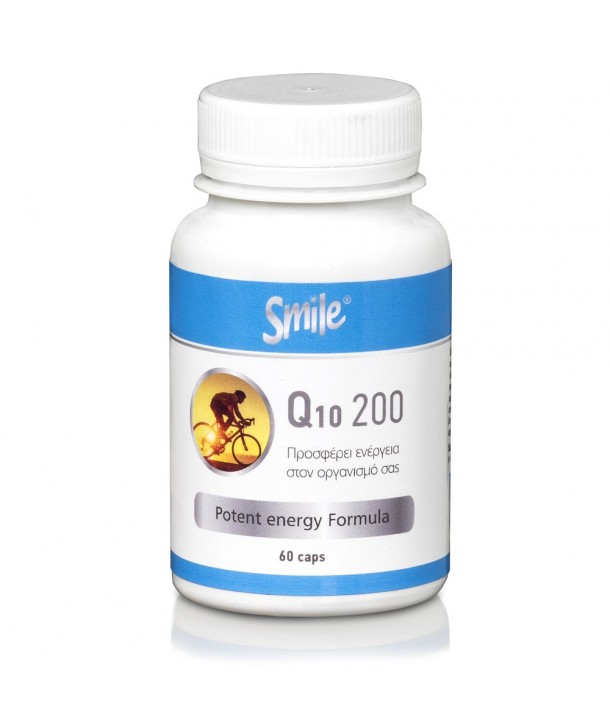
<strong>Coenzyme Q10</strong> is a benzoquinone acting like a vitamin. It is responsible for energy production in the body. In all human cells, energy from food is converted into energy in the mitochondria by Q10. 95% of the energy that the body needs (in the form of ATP) is produced with the help of Q10.
The organs with higher energy requirements (such as heart and liver) have the highest concentrations of Q10.
Q10 is also beneficial for people who suffer from migraines.
It also has an anticancer activity, but, at the same time, offers powerful protection to the heart muscle against the side effects of chemotherapy. Q10 protects the brain from neuro-degenerative diseases such as Parkinson’s disease.
It also protects the heart in case of arrest.
It has an effect in hypertension by reducing both systolic and diastolic pressure.
Studies show that it reduces oxidation and destruction of DNA’s double helix. Statins (drugs to lower cholesterol) reduce Q10 in the blood serum up to 40%, so Q10 is recommended to those who take these drugs.
Studies show that Q10 helps the immune system and makes the body resist to certain infections and various forms of cancer.
Its action and the protection that it exerts to the heart muscle is important and helps even patients.
Q10 may help patients with AIDS. It is no coincidence that patients with heart problems, cancer or AIDS have a Q10 deficiency.
The organs with higher energy requirements (such as heart and liver) have the highest concentrations of Q10.
Q10 is also beneficial for people who suffer from migraines.
It also has an anticancer activity, but, at the same time, offers powerful protection to the heart muscle against the side effects of chemotherapy. Q10 protects the brain from neuro-degenerative diseases such as Parkinson’s disease.
It also protects the heart in case of arrest.
It has an effect in hypertension by reducing both systolic and diastolic pressure.
Studies show that it reduces oxidation and destruction of DNA’s double helix. Statins (drugs to lower cholesterol) reduce Q10 in the blood serum up to 40%, so Q10 is recommended to those who take these drugs.
Studies show that Q10 helps the immune system and makes the body resist to certain infections and various forms of cancer.
Its action and the protection that it exerts to the heart muscle is important and helps even patients.
Q10 may help patients with AIDS. It is no coincidence that patients with heart problems, cancer or AIDS have a Q10 deficiency.
